Forefront Technology Perspective: Retail Technology Trends in 2026

Introduction: Retail in 2026 is no longer about selling products it’s about running a smarter business
Retail has always been a fast-moving industry, but 2026 is shaping up to be a defining year. Across the United States and Finland, retailers are facing the same hard truth: margins are tighter, customer expectations are higher, and manual operations simply don’t scale anymore.
Consumers want products available when and where they need them, prices that feel fair, and experiences that feel personal. Retail leaders, on the other hand, want predictable finances, accurate forecasting, lower waste, and better control across branches. This gap between expectation and execution is where technology steps in.
From Forefront Technology’s experience working with multi-branch supermarkets, specialty retailers, and growing retail chains, one thing is clear: Retail Technology Trends in 2026 are less about hype and more about practical, revenue-driven transformation.
This blog explores the most important trends shaping retail in the US and Finland not from a buzzword-heavy angle, but from a real-world, problem-solving perspective that puts people, processes, and profitability first.
1. AI in retail: from “interesting” to absolutely essential
For years, AI in retail was discussed as a future concept. In 2026, it’s simply a competitive necessity.
The real problem retailers face
Most retailers struggle with:
Guesswork-based demand planning
Seasonal stockouts or excess inventory
Promotions that don’t convert as expected
Poor visibility into what actually drives sales
These issues directly impact revenue and customer trust.
How AI is changing the game
Modern AI-driven retail systems analyse historical sales, seasonality, local demand patterns, promotions, and even external factors to forecast demand with far higher accuracy.
Instead of reacting to problems after they occur, retailers can:
Anticipate demand spikes
Automatically adjust replenishment levels
Optimize pricing and promotions
Reduce waste and markdowns
Why this matters in the US and Finland
US retailers benefit from AI’s ability to manage scale hundreds of stores, thousands of SKUs, and complex promotions.
Finnish retailers, operating in highly efficiency-driven and sustainability-focused markets, use AI to minimize waste and align stock with real consumption patterns.
AI is no longer about replacing people. It’s about giving retail teams better answers, faster.
2. Unified inventory and ERP: the backbone of modern retail
One of the biggest retail technology mistakes is treating inventory, finance, and sales as separate systems.
The common pain points
Retailers often face:
One stock number at the store, another at head office
Manual stock transfers between branches
Delayed financial reporting
No real-time view of profitability by store or category
This disconnect leads to lost sales and poor financial decisions.
The shift toward unified retail ERP
In 2026, leading retailers are moving to integrated retail ERP platforms where:
POS, inventory, procurement, and finance work as one
Stock movement is visible across all branches in real time
Financial performance can be tracked daily, not monthly
Business impact
With a unified ERP:
Store managers know exactly what to reorder
Head office can rebalance stock between locations
Finance teams get accurate margin and cash-flow data
Leadership can make confident expansion decisions
This shift is especially critical for multi-branch supermarkets and retail chains, where even small inefficiencies multiply quickly.
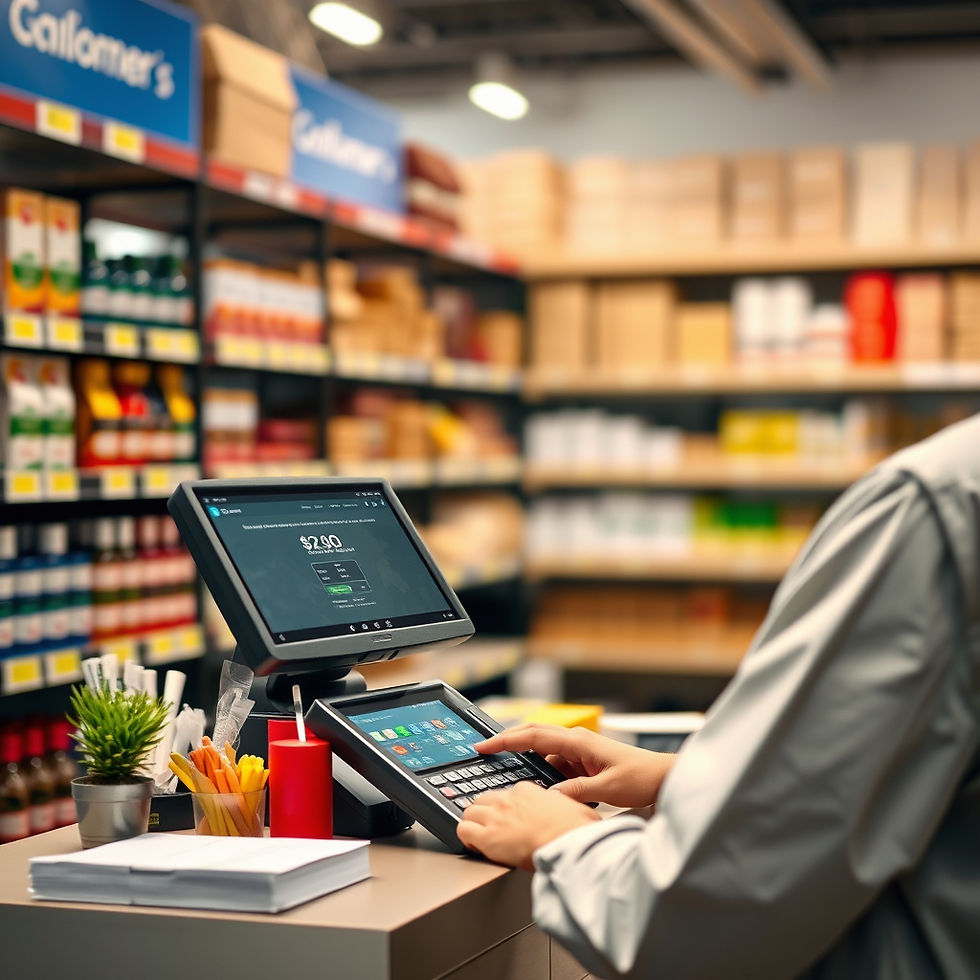
3. Cloud POS systems: flexibility beats legacy stability
Traditional POS systems were built for a simpler retail world. In 2026, they are one of the biggest bottlenecks.
Why legacy POS no longer works
Older systems struggle with:
Limited integration with eCommerce
Manual updates across stores
Poor analytics
Inflexibility during promotions or peak seasons
The cloud POS advantage
Cloud-based POS systems enable:
Centralized updates across all stores
Real-time sales and inventory visibility
Seamless integration with ERP, loyalty, and analytics
Faster rollout of new stores or branches
US vs Finland perspective
In the US, cloud POS supports rapid growth, franchise expansion, and omnichannel experiences.
In Finland, where operational efficiency and reliability are paramount, cloud POS ensures consistency, compliance, and data accuracy.
A modern POS is no longer just a billing tool and it’s a data engine for the entire retail business.
4. Omnichannel retail: customers don’t see channels, only brands
One of the strongest Retail Technology Trends for 2026 is the move toward true omnichannel retail.
The customer reality
Customers don’t think in terms of:
Online vs offline
Mobile vs store
They simply expect:
Accurate stock availability
Flexible delivery or pickup
Easy returns
Personalized offers
The operational challenge
Retailers struggle because systems are fragmented:
Online inventory doesn’t match store inventory
Loyalty data is split across platforms
Returns are manual and time-consuming
The omnichannel solution
Retailers adopting unified omnichannel platforms can:
Offer buy-online-pickup-in-store
Enable seamless returns across channels
Deliver personalized promotions based on total purchase history
This is no longer optional. In 2026, omnichannel is the baseline, not a premium feature.
5. Automation for efficiency: doing more with smaller teams
Labour shortages and rising operational costs are global challenges. Retailers can’t simply hire their way out.
Where time is being wasted
Retail staff often spend hours on:
Manual stock checks
Repetitive data entry
Spreadsheet-based reporting
Reactive replenishment
Automation that actually helps
Smart retail automation focuses on:
Automated reordering for fast-moving items
Alerts for slow-moving or overstocked products
Automated financial and compliance reports
Equipment and asset monitoring
The result is not job loss, but better job quality, staff focus on customers instead of paperwork.

6. Financial clarity: turning sales data into profit insights
Retail success isn’t about top-line revenue alone. Profitability is the real goal.
The financial blind spot
Many retailers can see sales but struggle to answer:
Which products actually drive margin?
Which stores are underperforming?
How promotions impact profitability, not just volume?
Data-driven finance in 2026
Modern retail systems link:
Sales data
Inventory costs
Operational expenses
Asset performance
This gives leadership:
Accurate daily profit snapshots
Better budgeting and forecasting
Smarter pricing and promotion strategies
For CFOs and owners, this level of clarity is transformational.
7. Sustainability and waste reduction: especially critical in Finland
Sustainability is not a trend in Finland, it’s an expectation.
Retail sustainability challenges
Retailers face:
Food waste
Overstock disposal
Energy-intensive operations
Pressure for transparency
How technology supports sustainability
Retail technology enables:
Better demand forecasting to reduce waste
Inventory lifecycle tracking
Asset monitoring to reduce energy loss
Data-backed sustainability reporting
In Finland, retailers using technology to reduce waste often see both environmental and financial gains.
8. Cybersecurity and data trust: protecting the retail brand
As retail becomes more digital, it also becomes more vulnerable.
What’s at risk
Retailers handle:
Customer personal data
Payment information
Supplier contracts
Financial records
A single breach can damage trust built over years.
Retail cybersecurity priorities for 2026
Secure POS and payment systems
Role-based access controls
Encrypted customer data
Automated compliance reporting
Cybersecurity is no longer an IT issue it’s a brand protection strategy.
Real-world example: Multi-branch supermarket in Finland
The challenge
A growing supermarket chain in Finland faced:
Frequent stockouts of high-demand items
Overstocking of slow-moving products
Poor visibility across branches
Financial reports that arrived too late to act
The solution
With the support of Forefront Technology, the retailer implemented:
AI-driven demand forecasting for key SKUs
ERP-based automated replenishment rules
Smart stock transfers between nearby branches
Asset management to reduce equipment downtime
Centralized POS and financial dashboards
The results
35% reduction in stockouts during peak seasons
18% improvement in inventory turnover
Increased overall sales and profit margins
Faster, more accurate financial reporting
Higher customer satisfaction across all branches
This transformation proved that Retail Technology Trends deliver real ROI when applied to real problems.
A practical roadmap for retailers entering 2026
Step 1: Identify the biggest operational pain point: Inventory accuracy, staffing, finance, or customer experience.
Step 2: Modernize the core systems: POS, ERP, and inventory must work together.
Step 3: Apply AI and automation selectively: Focus on high-impact areas first.
Step 4: Measure outcomes, not features: Track stockouts, margins, time saved, and customer retention.
Step 5: Scale what works: Expand successful pilots across all locations.
Conclusion: Retail Winners in 2026 Will Be Smarter, Not Bigger — Retail Technology Trends for 2026
The most successful retailers in the US and Finland in 2026 won’t necessarily be the largest. They’ll be the ones that:
Use AI to make better decisions
Rely on unified systems instead of disconnected tools
Focus on financial clarity and sustainability
Put customer experience at the centre of every process
Retail Technology Trends are not about chasing innovation for its own sake. They are about building resilient, profitable, and future-ready retail businesses.
For retailers ready to move from reactive operations to data-driven growth, the path forward is clear and the technology to support it is already here.



Comments